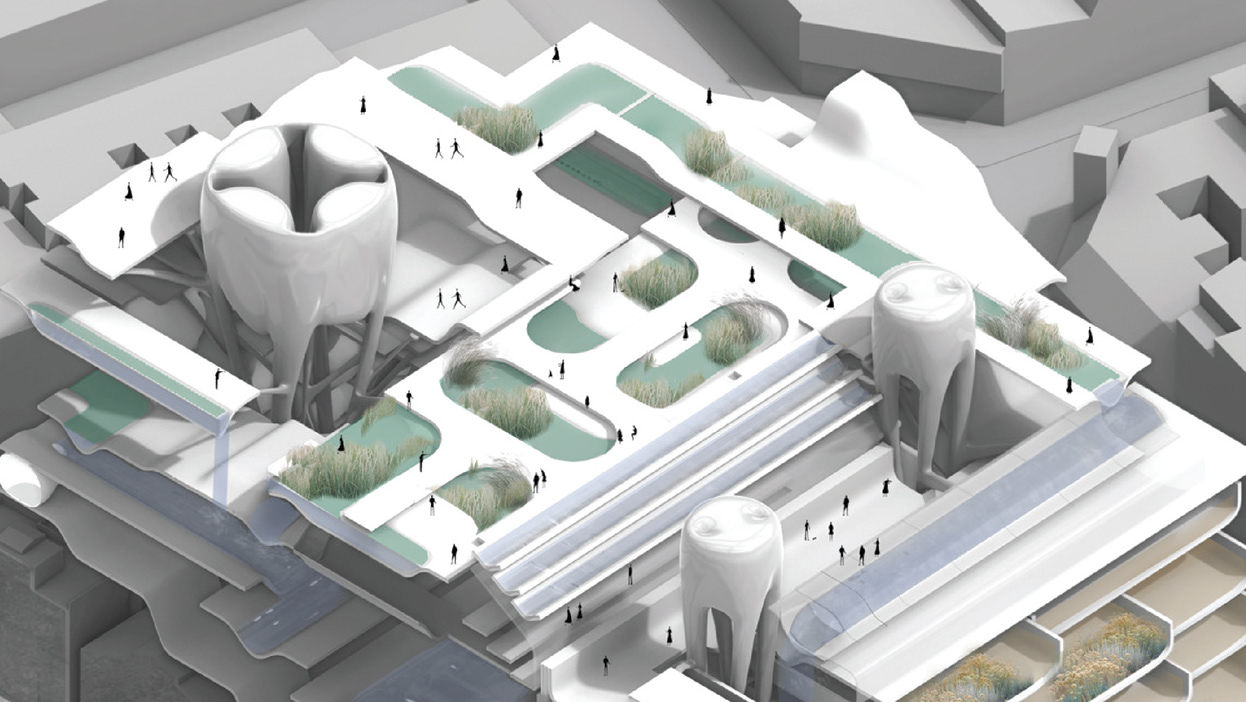

Barcelona faces a critical shortage of green space, falling below the 10 sq.m. per inhabitant recommended by the World Health Organization (WHO). Urban Sprout leverages data visualization to analyze the city's green space distribution, identify priority areas for intervention, and support urban planners in strategic decision-making.
By integrating spatial and demographic data, this research provides actionable insights for municipalities to enhance urban greenery, improve residents' well-being, and foster a more sustainable city. The findings serve as a crucial tool for policy formulation and urban resilience planning.
Methodology
This research employed a systematic data visualization approach structured in three phases: Data Layers, Data Analysis, and Output generation.
Data Layers Collection: Five primary datasets were integrated from Barcelona's Open Data initiative: green spaces inventory, population demographics, CSECCENS (socioeconomic indicators), district administrative boundaries, and street network infrastructure. All spatial data was processed and standardized using QGIS for compatibility.
Data Analysis Processing: The core analysis calculated green density metrics by combining green space coverage with population data across all districts. This processing identified performance rankings, categorizing districts into best and worst performers based on green space availability per capita relative to WHO recommendations.
Output Visualization: The analysis generated three visualization types: static district comparison maps showing best and worst performing areas, comprehensive green space distribution analysis, and an animated green space proximity assessment using walkable catchment areas to demonstrate accessibility patterns.
This streamlined approach transforms complex spatial datasets into clear, actionable insights for urban planning decision-making.
Results
The analysis reveals significant disparities in Barcelona's green space distribution across the city's ten administrative districts, as demonstrated in the following visualizations.
These findings provide Barcelona's urban planning department with data-driven evidence for targeted green space interventions and policy prioritization.