
Project team: Chanakan Chormai, Sunida Sailasuta, and Josh Oates
Unleash the magic of paper folding - Discover intricate geometries in augmented reality. Explore the possibilities.
Folding paper holds significant relevance in elevating the senses of space and design in architecture due to several factors, such as its versatility, adaptability, expressiveness, tactility, and cultural significance.
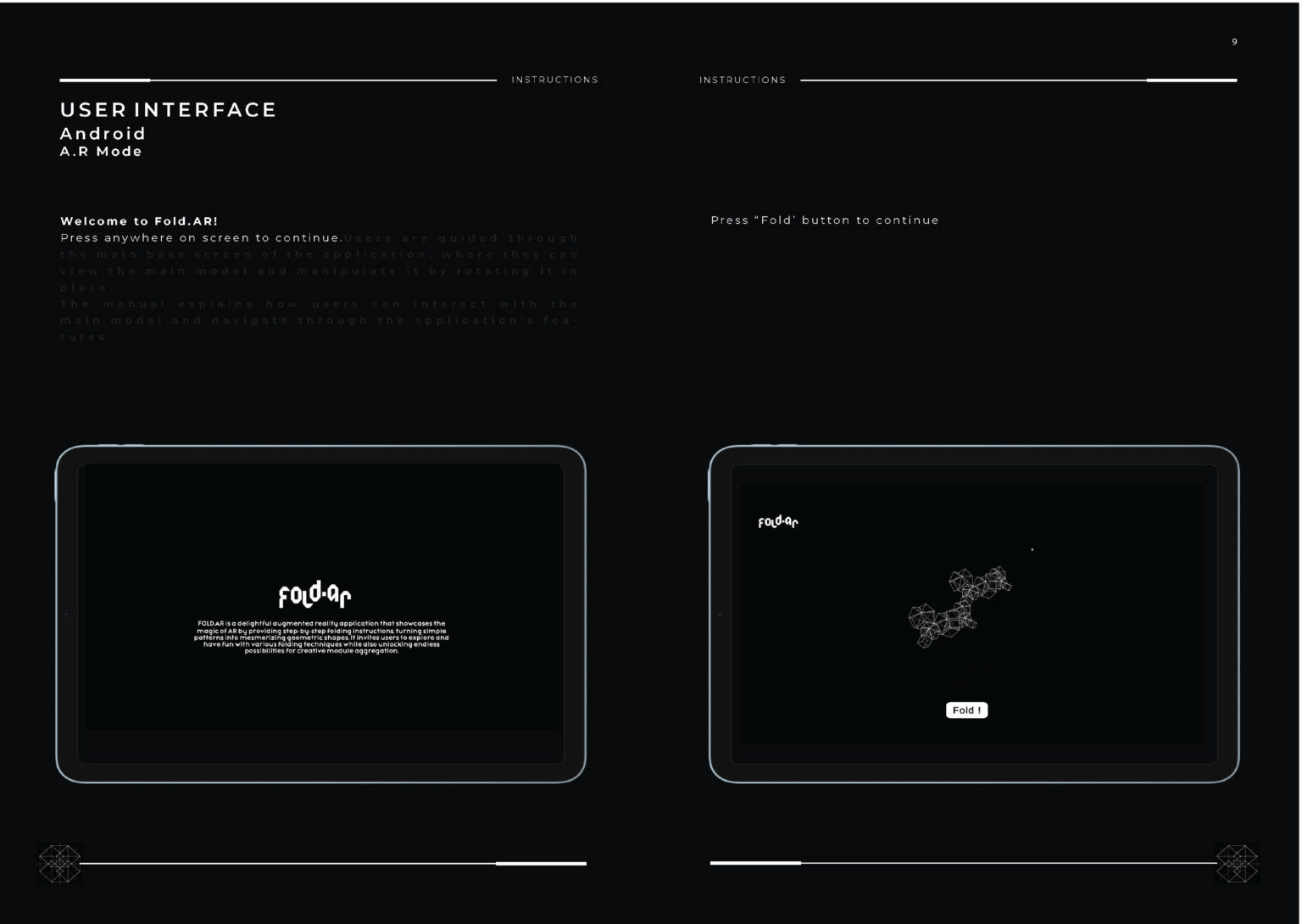
FOLD.AR is a delightful augmented reality application that showcases the magic of AR by providing step-by-step folding instructions, turning simple patterns into mesmerizing geometric shapes. It invites users to explore and have fun with various folding techniques while also unlocking endless possibilities for creative module aggregation.
UX Research Approach
Through user testing and iterative design, I focused on creating an intuitive learning experience that prioritizes simplicity and clear visual sequences. The research revealed users needed:
(1) immediate visual feedback
(2) step-by-step guidance without cognitive overload
(3) seamless transition from digital instruction to physical creation
Design Philosophy Learning Through Progressive Disclosure
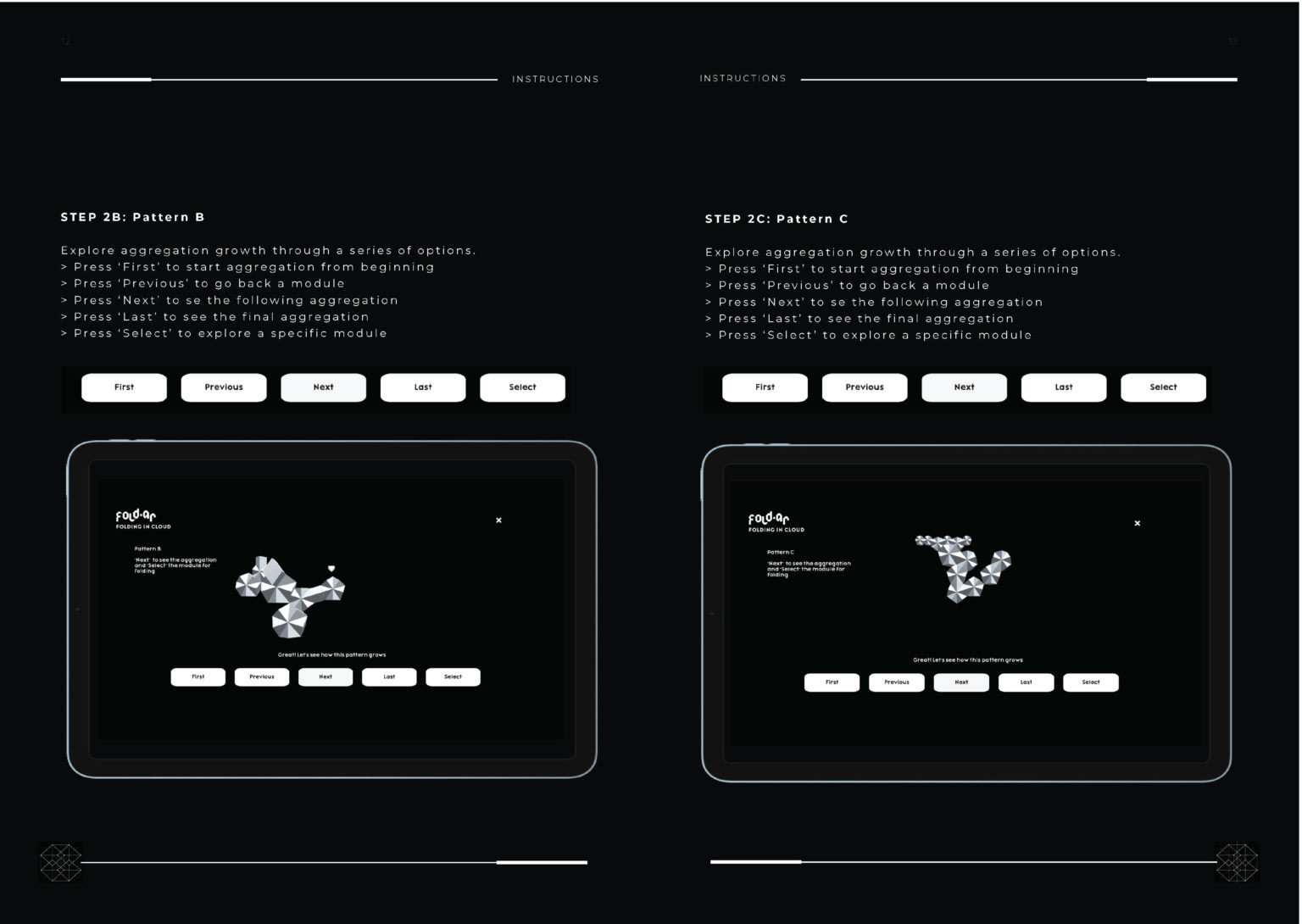
The interface follows a deliberate learning sequence: Final 3D visualization → Unfolding patterns → Step-by-step instruction → Module aggregation. This approach allows users to understand the end goal first, then deconstruct the process, making complex folding logic accessible and engaging.
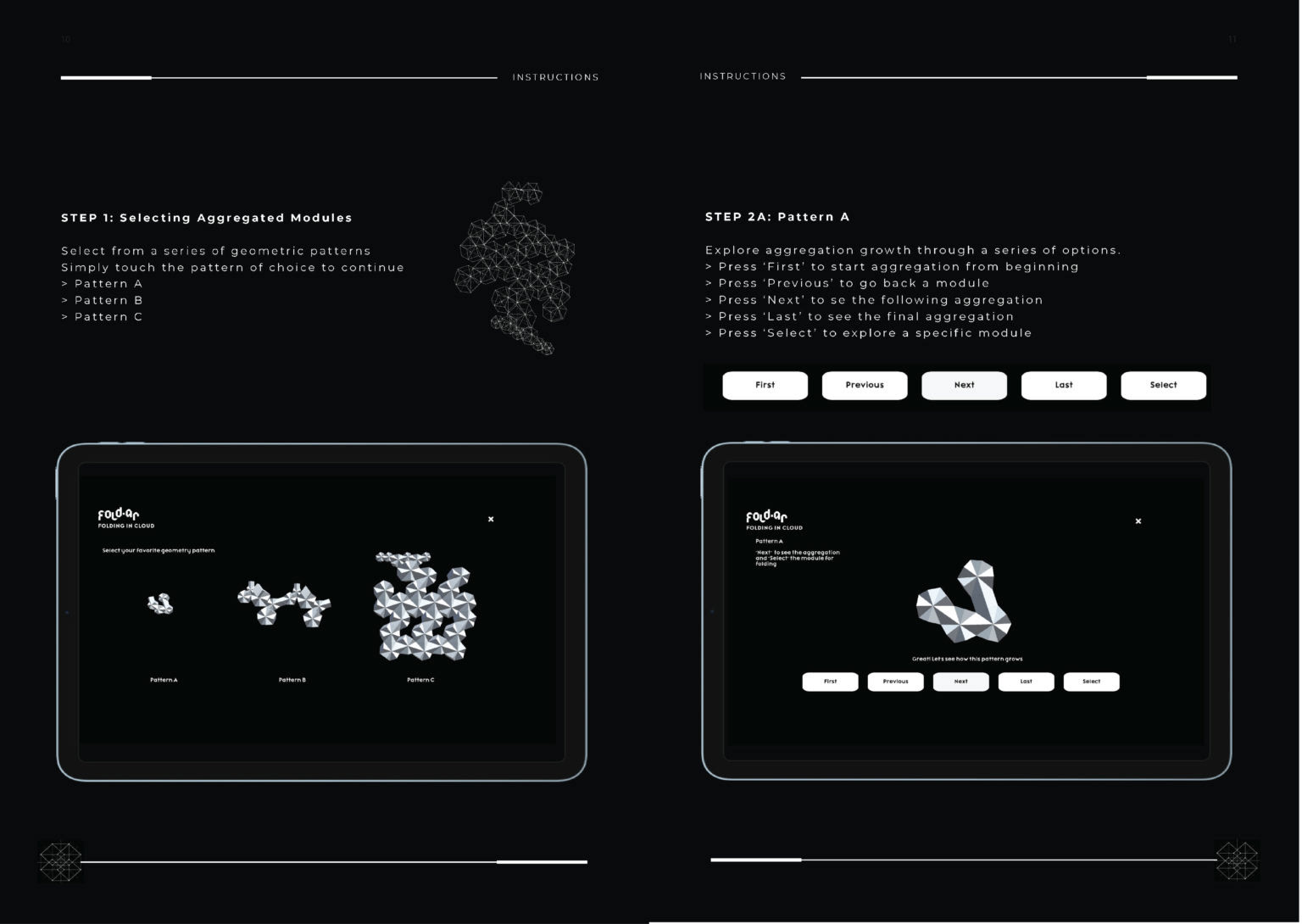
The FOLD.AR interface is divided into three sections:
Part 1: Geometry Selection
Allows users to select the geometry they wish to study.
Allows users to select the geometry they wish to study.
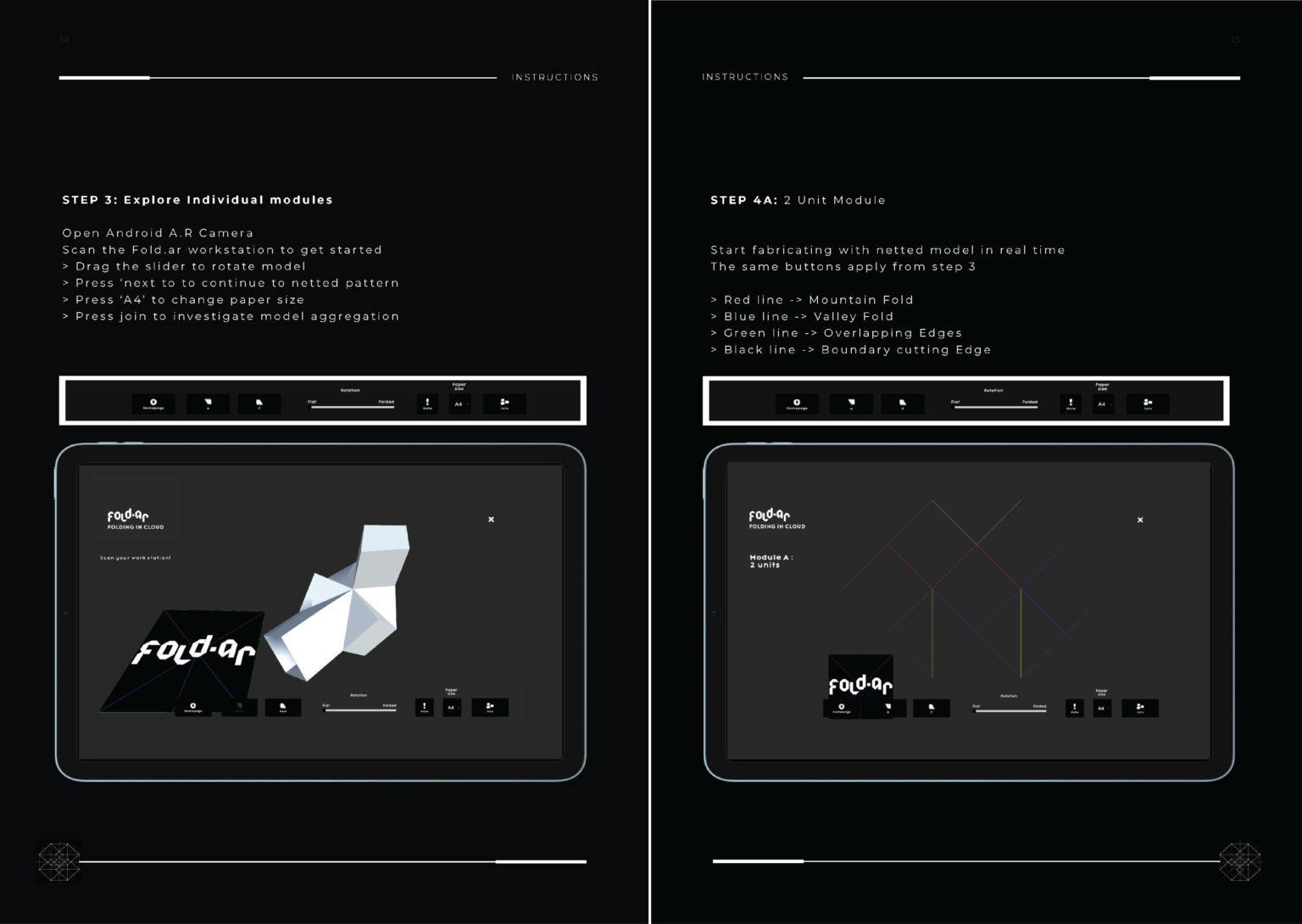
Part 2: AR-Guided Folding
Seamlessly integrates the AR camera with the chosen geometry. Users can easily track their workflow step by step with the guide located beside the workspace.
Seamlessly integrates the AR camera with the chosen geometry. Users can easily track their workflow step by step with the guide located beside the workspace.
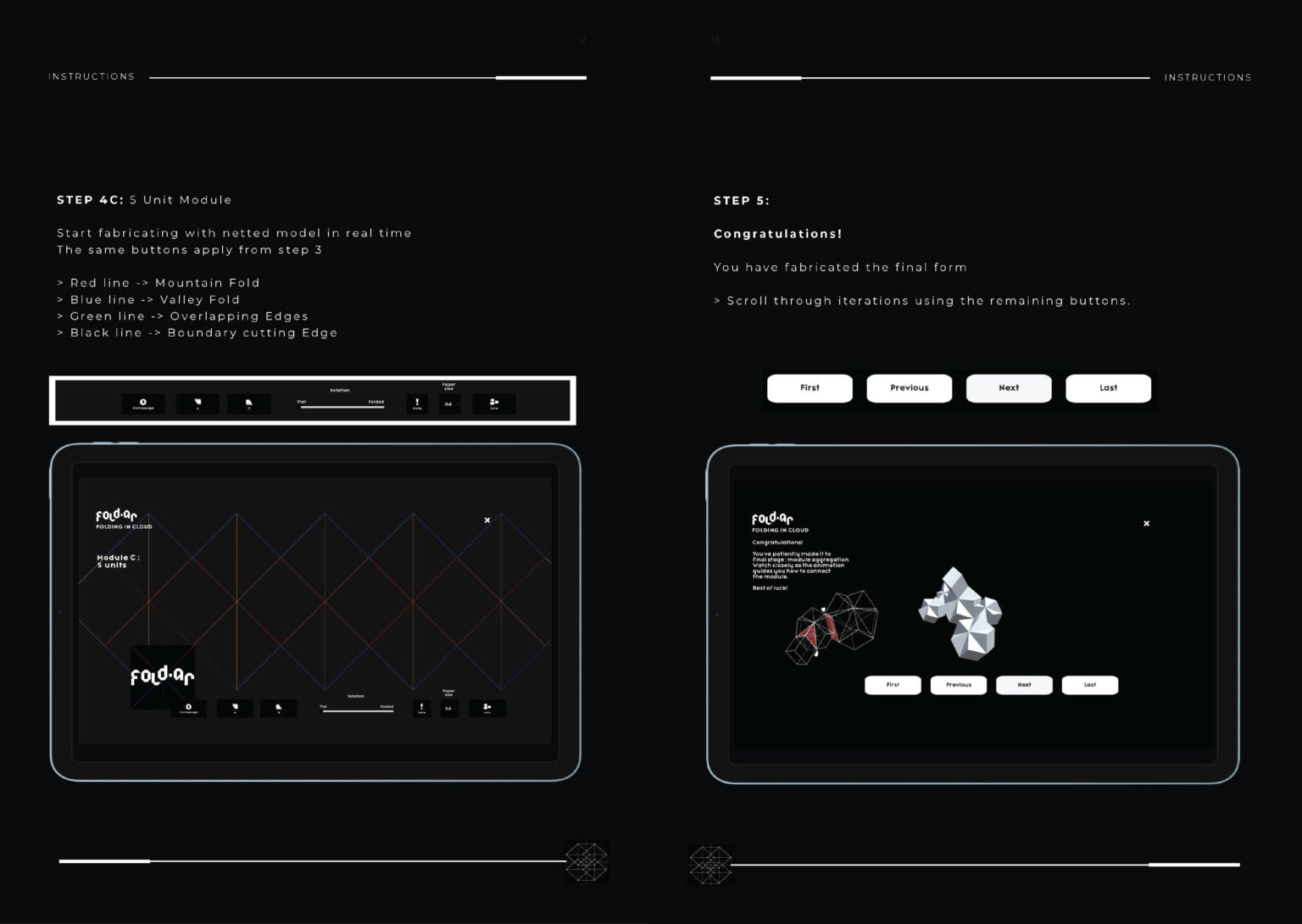
Part 3: Aggregation Assistant
Visualizes the aggregation process in the easiest way possible, along with a diagram of its connections. Users can ensure they connect the right side and direction, making the entire process enjoyable and enabling them to explore the logic of folding while discovering many more possibilities of basic patterns.
Visualizes the aggregation process in the easiest way possible, along with a diagram of its connections. Users can ensure they connect the right side and direction, making the entire process enjoyable and enabling them to explore the logic of folding while discovering many more possibilities of basic patterns.
Future Applications & Project Impact
FOLD.AR demonstrates how augmented reality can bridge physical and digital design processes. The application's methodology opens possibilities for interactive architectural prototyping, customizable design exploration, and educational tools that make complex geometric principles accessible through intuitive, hands-on learning experiences. This project established frameworks for AR-assisted learning in architectural education, emphasizing how digital tools can enhance tactile understanding of spatial concepts and geometric relationships.